

| Qty | 1 | 2 - 4 | 5 - 9 | 10 - 19 | 20 - 49 | 50 - 99 | 100 - 199 | 200 - 299 | 300 - 499 | 500 - 999 | 1000 - 5000 |
|---|---|---|---|---|---|---|---|---|---|---|---|
| Unit Price | $26.98 | $16.64 | $8.89 | $4.18 | $2.43 | $1.73 | $1.38 | $1.27 | $0.97 | $0.57 | $0.37 |
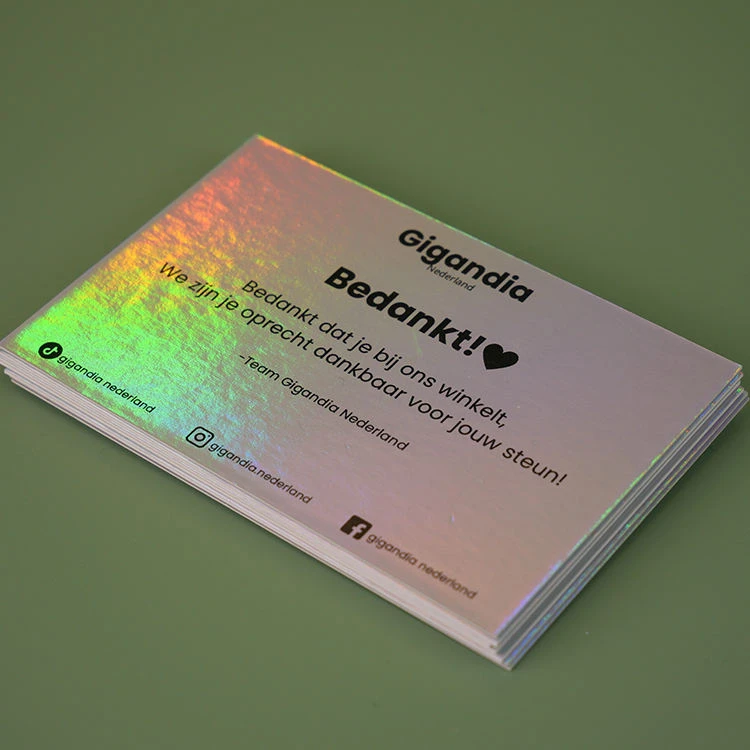
Photo identification cards are fundamental tools for visual security, designed to answer critical questions such as, “Who are you?” and “Do you belong here?”
While the cost of photo ID printers has decreased over the years—making them more accessible for businesses aiming to enhance security—this affordability also presents a challenge. Criminals can now more easily acquire printers to produce counterfeit badges that closely mimic legitimate ones.
For organizations prioritizing security and aiming to mitigate the risk of counterfeiting, incorporating a holographic laminate into your ID cards is an effective solution. This additional layer not only significantly reduces the potential for forgery but also extends the durability and lifespan of your security ID cards.
Investing in holographic laminates demonstrates a commitment to maintaining a robust security infrastructure while protecting the integrity of your organization.
Holographic ID card printers that can apply a security hologram, such as the SMART-51L photo ID printer, SMART-70L photo id card printer, and SMART-81L retransfer card printer, have an additional step in the printing process to physical laminate an additional film over the printed card surface. This additional layer not only provides layers of security as detailed below, but also add durability to the card.
Hologram Card Printers – Levels of Security
The security of holographic ID card printers is categorized into three distinct levels, with each level incorporating specific features designed to enhance protection and prevent counterfeiting.
Level One: Overt Features
These holographic ID card printer features are visible to the naked eye and require no special tools for verification. Examples include:
Rainbow, grayscale, and true-color effects.
Switch images (which transition between two images when the card is tilted).
Guilloche patterns and wireframe text.
Level One holograms are typically produced with an origination resolution of up to 600 DPI.
Level Two: Covert Features
Covert security ID cards features represent a more advanced level of security, designed to be detectable only with specialized tools or by individuals with proper training. These features include:
Color-shifting inks and security inks (such as those sensitive to ultraviolet (UV) or infrared (IR) light).
Micro-text, latent images, and covert laser retrievable (CLR) images.
Holograms at this level are produced with origination resolutions of up to 1200 DPI, ensuring a high degree of detail and security.
Level Three: Forensic Features
These hologram card printer features are exceptionally advanced and are accessible exclusively to trained personnel. Their application is strictly controlled, with sensitive details withheld even from most manufacturing staff to maintain security integrity.
Each level of holographic security is meticulously designed to offer progressively enhanced protection, catering to the specific requirements of organizations that prioritize secure identification solutions.
Generic or Stock Holograms
Most manufacturers of hologram card printers provide generic (stock) holograms and may also offer customized hologram options. A generic hologram refers to a standard image available for purchase by anyone.
IDP offers a range of vertical market generic holograms, including designs tailored for Law Enforcement, Medical/Healthcare, Fire Rescue, and two variations of globe security images. These stock holograms for security ID cards provide Level One security and effectively minimize the risk of counterfeiting and image tampering.
Reviews
There are no reviews yet.